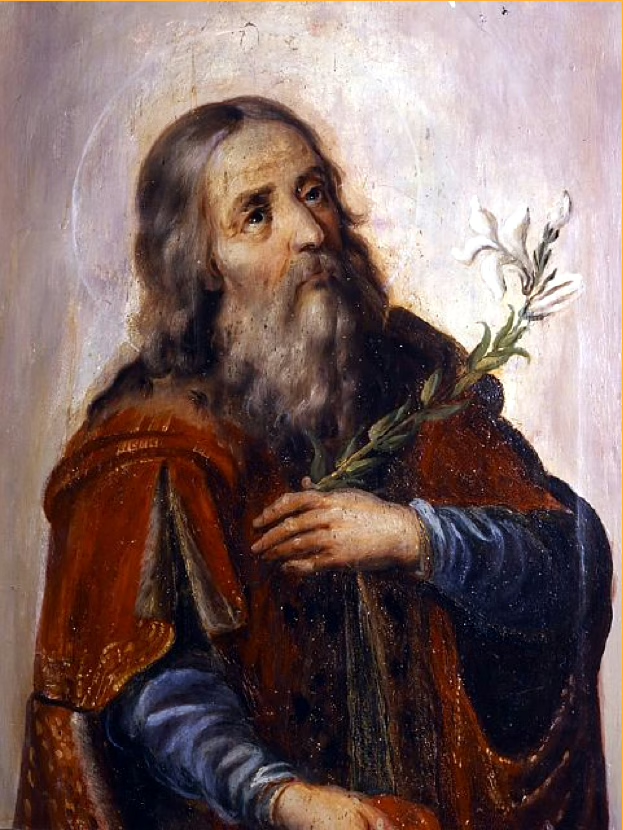
Saint Anselm

Patron saint of theologians and philosophers.
Feast Day: April 21st
Doctor of the Church and Bishop
Aosta, Italy
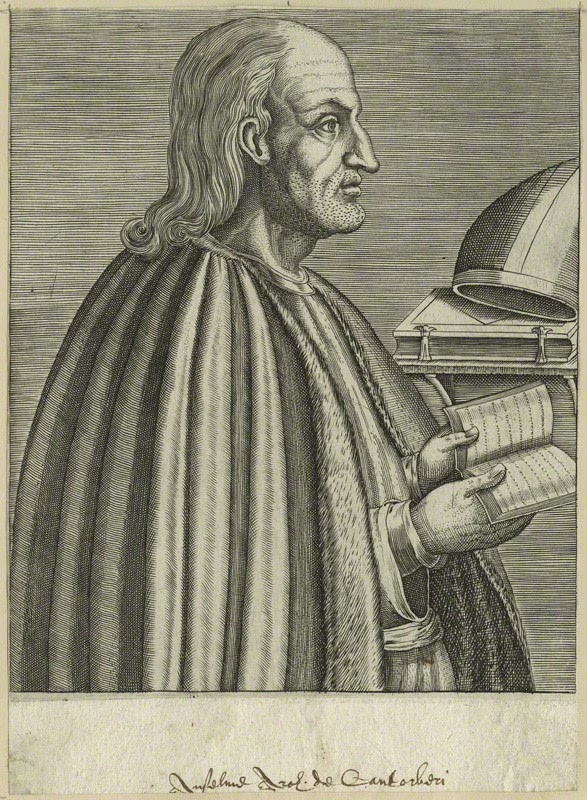
Saint Anselm
Public Domain:  AnselmCanterbury2.jpb via Wikimedia Commons.
Feast Day: April 21st
Doctor of the Church and Bishop
Aosta, Italy

About

Saint Anselm of Canterbury was a Benedictine monk, theologian, and Archbishop of Canterbury who lived during the 11th century. Born in Aosta, he entered monastic life at the Abbey of Bec in Normandy, where he became known for his deep intellect and holiness. Anselm is often called the “Father of Scholasticism” because he helped shape how the Church uses reason to understand faith. His famous phrase, “faith seeking understanding,” captures his approach, believing first, then striving to understand more deeply. As Archbishop of Canterbury, he faced significant conflict with kings over the independence of the Church. Despite exile and hardship, he remained faithful and steadfast, defending the rights of the Church and the truth of the faith.

Legacy

Saint Anselm’s legacy is profound in both theology and philosophy. He is best known for developing the ontological argument for the existence of God, one of the most influential philosophical arguments in Christian history. More importantly, his work Cur Deus Homo (“Why God Became Man”) helped explain the necessity of Christ’s redemption in a way that shaped Western theology for centuries. His integration of faith and reason laid the groundwork for later theologians like Saint Thomas Aquinas. Anselm showed that intellectual inquiry, when rooted in faith, leads to a deeper love of God, not away from Him. His life stands as a witness that holiness and intellect are not opposed but meant to work together.
“For I do not seek to understand that I may believe, but I believe in order to understand.” — Saint Anselm of Canterbury

Before You Scroll

If this prayer was meaningful for you, join thousands of Catholics and receive our Monday Morning email with a reflection, prayer and resources.

Links

Related Content