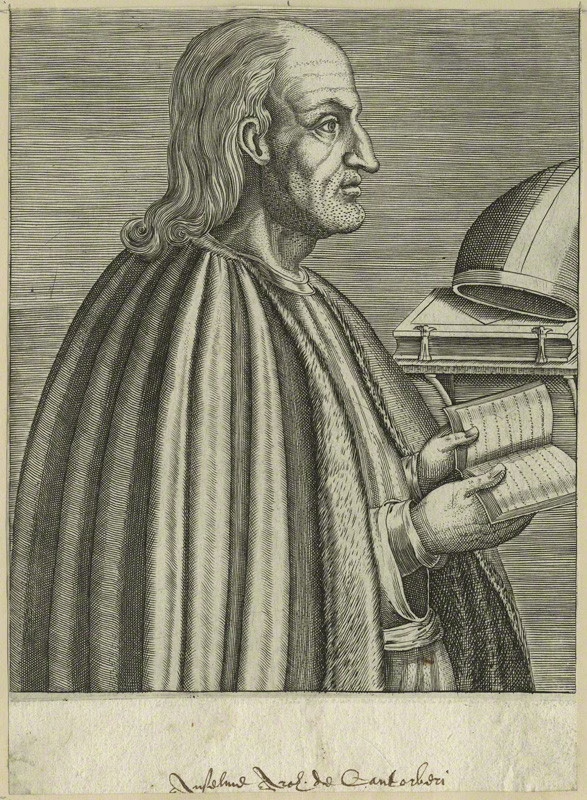
Saint Gregory Nazianzen

Patron Saint of students, theologians, bishops, friendship, writers.
Feast Day: January 2nd
Doctor of the Church, Bishop, and Religious
Nazianzus, Cappadocia (modern-day Turkey)
Saint Gregory Nazianzen
Public Domain: Gregor-Chora (cropped) via Wikimedia Commons.
Feast Day: January 2nd
Doctor of the Church, Bishop, and Religious
Nazianzus, Cappadocia (modern-day Turkey)

About

Saint Gregory Nazianzen, also known as Gregory the Theologian, was one of the most brilliant minds of the early Church and a master of sacred eloquence. Born in Cappadocia around 329 AD, he was a close friend and classmate of Saint Basil the Great in Athens, where both studied philosophy and rhetoric. Their friendship would later shape the intellectual and spiritual life of the Church. Gregory was ordained a priest reluctantly, preferring a life of contemplation and study. Yet his gifts as a preacher and theologian led him to serve as Bishop of Constantinople, where he became one of the Church’s strongest defenders of Trinitarian orthodoxy during the Arian controversy. His Five Theological Orations remain a cornerstone of Catholic and Orthodox theology, offering some of the clearest explanations of the divinity of the Holy Spirit and the mystery of the Trinity.

Legacy

Saint Gregory’s depth of insight and poetic eloquence earned him the title “The Theologian”, a rare distinction shared by only a few in Christian history. His sermons, letters, and poetry reveal a man of profound intellect and deep humility—one who longed for communion with God above all else. He is venerated as one of the Four Great Greek Doctors of the Church, alongside Saints Basil the Great, John Chrysostom, and Athanasius. Together with Basil and Chrysostom, he is honored in the Eastern Church as one of the Three Holy Hierarchs, celebrated each year on January 30. Saint Gregory’s life was marked by friendship, prayer, and the pursuit of divine truth—a reminder that theological brilliance and holiness must walk hand in hand.
“Let us seek to be like Christ, because Christ also became like us. Let us become gods for His sake, since He became man for ours.” — Saint Gregory Nazianzen

Links

Related Content